Showing posts with label note. Show all posts

Thursday, May 8, 2008

Thoughts About Age and the Entrepreneur

Recently I read an interesting blog by Paul Kedrosky (Age and the Entrepreneur).

I have a theory that there are 3 time frames to start/join a start up:

Age 22:
Just finish army service (I am from Israel..). Young and Naive. Following some crazy ideas with some friends. Work hard and play harder.

After you spend some time in a start up, your spouse (which somehow you manage to find while working 16 hours a day) is fed up with your schedule and "ask" you to "find a real job". Or in my case, the start up is closed and/or acquired by a bigger company.

Age 35:
So you spent some time in a big company and learn how to do things, or how not to do things, you feel it is time to do something yourself. You pick up to phone and call your friends. If you are lucky / got smarter - there are not the same from the first start up... And you start your own or join a start up you believe in and know why you should be there.

(Let's hope your spouse is OK with you following this path again...)

Age 50:
Either you spent more than 20 year in a big company or worked for 10 start ups by now, you are ready to lead or support a new idea. You are a domain expert (or at least, other think you are) with no interest to work in the same domain... So you start, join or consult to a start up.

Does this theory work for you?

E.T.

Sunday, April 20, 2008

Goodbye SAP, see you soon...

Dear friend,

After more than 7 years at SAP, it is time for me to follow another path.

During the last 7 years I had the pleasure to be challenged with interesting (and sometimes impossible) projects and roles.

I am very proud to have been part of many activities, including training development, leading SAP's eLearning and knowledge transfer initiatives and team management, building SDN and seeing its success, managing global teams and operations and building many prototypes. Representing SAP in many '2.0' events and be a SAP Venture Fellow.
Last but not least, be part of SAP Ux, helping improving existing products and driving ideas for new products.

I am very happy to be part of the SAP ecosystem and more importantly, the SAP extended family.

I made many friends along these years (such as yourself), as well as many air-miles...

I had the opportunity to join a small start up, Veodia, and to help them design and build unique applications with real business value. So I did.

For those who worked with me in the past - Thank you!
And for all the others - Let's build some cool applications and bring value with Veodia.


E.T.

Friday, July 27, 2007

Notes from reading "The Myths of Innovation" by Scott Berkun


The book includes many interesting topics and anecdotes about innovation, innovators and other factors, effecting and building the myths around innovation.

Scott did a great job encapsulating different phases and steps an innovative person or team go through doing the 'innovation' process as well as the different perspectives people have on the innovation before and after the acceptableness of it.

For Example:

Challenges: Find an Idea, develop a solution, secure sponsorship or funding, reproduce, reach customers.

Probability: (assuming 50% success rate and based on the challenges)
50%x50%x50%x50%x50%x50%x50%x50%=0.390625%
(do not get depressed, just yet...)

Feedback you better expect:
It will never work, no one will want it, it cannot work in practice, this is not the problem... Get out of my office...

and why you got it:
Ego, pride, politics, fear, priority, sloth, security, greed and consistency.

The bottom line is that there is no magic (now you can get depressed...) but there is a lot of hard work, timing, luck, curiosity, knowledge and focus involved.

the book includes many interesting quotes, such as:
"...History is written by those who wind and those who dominate... - Edward Said"
"...History is the lie commonly agreed upon... - Voltaire"
"...It does not matter where you start, as long as you start... - John Cage"
"...How do you systematize innovation? ... You do not... - Steve Jobs"
So - get back to work and hope one day you could look back and notice/appreciate your innovations.

E.T.

Technorati Tags: ,

Monday, June 25, 2007

10 reasons why I switched to Mac (MacBook Pro)

  1. So I could start my day with a smile and not with "Control" "Alt" "Delete".
  2. So I will not have only 1 hour of power.
  3. So I will not have to wait 5 minutes every time my laptop is waking up.
  4. So I could use my 24" Screens without the need to upgrade drivers and boost my docking stations beyond their limits.
  5. So I could open Photoshop files and get work done within less than 30 minutes.
  6. So I will not have the IT department pushing me "Critical Updates" every other day. (Especially the Excel French dictionary…)
  7. So my digital camera and I will be friends again.
  8. So I could run “Windows” within a small window (just for eMail and other must have Enterprise applications).
  9. So I could have videoconferences without any cables.
  10. So I would feel like I care about it and write this list.

:-)

E.T.

Technorati Tags ,,

Friday, June 22, 2007

Thoughts on video search and in-video ads

Yesterday afternoon at Supernova, thirteen companies selected by TechCrunch and Supernova presented 5 minutes demos.

ReadWriteWeb coveted the demos very well.

The interesting discussed trends were around mobile applications and experiences, vertical search and in-video ads.

I found the direction of creating an “ad layer” on top of user-generated content very interesting.
The mechanism of adding ‘business value’ at post-production phase seems very scalable.

About 4 years ago, I was working with some of my team members on developing eLearning tools to capture knowledge within enterprises. The concept was very simple.
Take long recording of training sessions, NetMeeting/WebEx sessions and analyze the video stream. We found and indexed video frames where a new side was shown, when a new topic was discussed and so on. We were working on an OCR capability to automate adding labels to the index. The end result was a create tool to capture and generate many eLearning units – used by SAP Developer Network ever since…

Well… These were very simple videos and the eBooks were very structured. Today, the user-generated-videos as well as other high quality video clips are more complex and understanding/mining them can be used for more than smart indexing.

Some of the parameters that could be use to analyze a video could include:

  • Tags
    • Use tags to find key terms
  • Audio
    • Voice-to-Text, find key terms
    • Theme – could be recognize and tagged
  • Video/Image
    • OCR – extract the text, find key terms
    • Colors – colors could be matched to tagged branding colors
    • Refresh rate – indicate the pace of the video and could be use for tagging and matching
  • Time
    • Used to create anchors within the data stream
  • Links to this object
    • Indicates domains with interests in this content

So – by analyzing video content objects using such mechanism, one (or a system) could create a good meta-data level understanding of the content and other parameters which define the content and be able to match it to other content objects (such as ads) with similar characteristics. These days, using Adobe Flash and other multi-media formats, the ‘Ad layer’ could be added to relevant content. The time anchors in the movies provide an opportunity to provide the ads in context and on time.


adap.tv show a great demo of these capabilities.

I was focusing on better service to the users and they found a way to make money out of it... Why didn’t I think about it…


E.T.

Technorati Tags ,,,

Thursday, June 21, 2007

SuperNova2007 (6/...)

Does the Net Need an Upgrade?
(Van Jacobson, Rick Hutley, Norman Lewis, David Isenberg)

Applications, user expectations, business arrangements, and infrastructure demands are all changing as the Internet converges with voice, video, and mobile networks. There are even calls for a fundamental technical redesign of the Net, in order to address scaling, security, and other needs. Will the Internet of the next decade look different than the Internet of today? Should it?


Notes:

Rick Hutley:
• The Internet is not “out there” – it is a collections of activities shared by people and companies.
• The Internet as corporation use it – keep changing.
• The upgrade should be defined by the entities that use it.
• Security will continue to be a problem, as the nature of business become more complex.

Norman Lewis:
• We need to define who to engage in a discussion with the stakeholders and users.
• Security is a main topic. How do we create a balanced process and result?

Van Jacobson:
• The protocol was design in 1975 and was changed only 3 times since. And this is very good, compared to the telephone system – from a scale point of view.
• Keeping the “Net” simple was achieved by following the concept of pushing everything to the edge.
• The place we could not push to the edge was security. The “Net” is moving data and the “Net” is blind to the dataset, therefore it cannot help the end points with security. “Garbage/threats” in “garbage/threats” out.
• We need to upgrade the content and the ways to secured it – keep the “Net” simple.
• Making the “center/core” more complex will not work.

David Isenberg
• We need to be careful when trying to fix the current issues not to cause more damage.
• There are calls for upgrading the “Net” be companies – trying to support their current business models (limit Internet solutions that affect their business – for example – phone companies who would like to charge more for Internet services, providing VoIP).


My Thoughts:

Similar to ‘upgrading’ the ‘Web’ (offerings, services, applications) to ‘Web2.0’, upgrade of the Internet should bring real value and new concepts/applications.
There are constant changes in the way people and companies/organizations are using the Internet.
No one can stop current processes as these activities happens at the edges and are motivated by market needs. It cannot be stopped or rebooted.

As for the responsibility for the security issue (Network core/protocol or applications at the edge), the panel used examples of sending a secured letters via the mail.

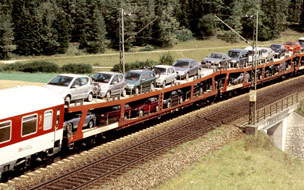
My example would be related to cars, trains and travel: At the edge, cars ars are getting better, safer, faster, smarter, greener, while in the core, the infrastructure is lagging behind. Forcing new order in transportation is like forcing cars to be loaded onto trains and travel on specific rails.


It is the way you would like to travel?
What is worst – a car crash or a train crash?

E.T.

Technorati Tags ,,,,

SuperNova2007 (5/...)

Data dump: KC Claffy
The greatest problems of the Internet… and why we aren’t making measurable progress in solving them.


Notes:

Claffy listed the top operational Internet problems as shown here:
http://www.caida.org/publications/presentations/2005/topproblemsnet/topproblemsnet.pdf

According to her, the problem with this list is that it was complied with uncompleted data, which was collected, by companies and organizations with interests in the domain. Can we trust this data and outcomes?


My Thoughts:

I am concerned from the presented trends, and even more from the notion that professional claim they do not have enough good data, but yet publish their finding…

Is more = less or less = naïve/happy?

One of the key concepts of the Internet, as I heard in the following session, was ‘keep the Net simple and push complexity to the edges’. Maybe the way to receive some relevant data should come from addressing the users issues. Users = customers and that could create more pressure on the providers to share and measure relevant operational data.

E.T.

Technorati Tags ,,,,

SuperNova2007 (4/...)

Spotlight: Udi Manber
Search is at the center of today’s Internet experience. The top search technologist at the top search company discusses where search is going


Notes:

Scale and diversity is amazing. It seems that 20-25% of the queries Google see each day are new…

One of the parameter of the search algorithm is location based, which helps/makes the result to be more relevant to the user.

Instance translation allows people to learn and consume information from other languages.


My thoughts:

Great short session about the current and future search features from Google.

As for the demo we saw - Does “Where I am” indicates “Who I am” and what my interests are?

I guess I could stay logged in to Google at all time and let them track me anywhere I go…


E.T.


Technorati Tags ,,,,

SuperNova2007 (3/...)

Dark Matter: Are We Missing the Real Internet Economy?
(Ge Jin, Max Levchin, Andrea Matwyshyn, Elliot Noss, Ellen Siminoff)

Much of the economic activity online isn't the visible shopping or advertising. Billions of dollars flow through hidden activities, ranging from the widely-accepted (search marketing and behavioral targeting), to the grey market ("gold farming" and manipulation of domain names), to the bad guys (the spam economy and extortion via denial of service). Could these under-appreciated practices someday (or perhaps today) be the real economic backbone of the Web?


Notes:

10-15% of search result revenue is generated by users who misspell the URL in the address bar and get to a “search” page – populated by Yahoo!/Google generated links.

Domain name resale will merge (in the process) with creating new domains. The best advertising value on the Web is a domain name.

There was a long discussion about the risks, methods and activities around ID thefts, scams and other ways to rip your network ID (from eBay to eMail accounts and so). The severity of attacks is growing.
Too scary to write about…

Opportunities:
The Widgets are the next big thing in advertising.
Flash based Widgets are a great platform to consume (view and buy) media and transactions.
Domain navigation will continue to play important role due to search algorithms, credibility and so on.

The discussion ended with a positive note that individuals and companies who are successful (have real customers and real money flow) – are successful because they helped people to achieve what they (the people) wanted.


My thoughts:

Action items
  • Reset online passwords…
  • Close old accounts…
  • Think about the future role of the browser vs. widgets vs. OS.


E.T.


Technorati Tags ,,,

SuperNova2007 (2/...)

Industry Visions: Nathan Myhrvold, Greg Papadapolous, Irving Wladawsky-Berger

What will drive future growth and innovation in the technology sector? Hear the surprising predictions of three industry heavyweights.


Notes:

IT systems are complex. More and more people are using them.
Systems are predictable as they were design by people. People are not predictable. The main problem we have now is that most of the complex systems were designed long time ago. Things changed and the systems did not. This is why IT services industry grown so much – it simply connected people and systems.

There is a need for new architectures that could adopt as people evolve. We still think in physical world terms such as ‘there is no need to redesign or rebuild the golden bridge’. True – but it still serve the same needs in the same way – but other IT systems needs to provide solutions to new needs we do no expect from a physical object…

The ‘new’ Knowledge economy stands on a narrow base, provided created by the industrial economy.


My thoughts:

It seems we are trying (again) to solve a “round” problems with “square” solutions. It is like digital cameras; In order to provide better pictures we invest in better sensors, storage, higher resolution and sometimes in better lenses.

Well – it works in some cases. From my perspective, digital cameras may not be as good as film, but they changed the rules of the game by reducing the cost of experiments, making it easy to edit and share.

I think we should not ‘(re)engineer’ the systems by mimicking and automating high-enough-resolution observations, but to think what are we trying to achieve first (regardless of the current way we do it now, due to our ability to adopt to IT limitations), how would we like to work and what tools do we have and will have during the lifetime of that system.


E.T.

Technorati Tags ,,,

SuperNova2007 (1/...)

I'm attending Supernova2007 event today.

Here are some of my notes and thoughts so far.


Provocations: Denise Caruso, Clay Shirky
Deep thinkers set the stage for the conference, by challenging us to question our assumptions about technology.

Denise Caruso (Founder, Hybrid Vigor Institute) session was around Anti-Social Media and 'risk assessment' for innovation.

What are the costs due to the positive and negative outcomes of the innovation? For example, nuclear power, Google Street view...
The suggested solutions are around community and conversations.
"Let's talk,” allow to de-escalate issues and to better understand the cost and outcomes.

Why people do not talk... Fear, potential cost, Blogs that create comments and not conversations...

The nature of technology shapes how we work and live.
How can we create social networks for people who are NOT like us?

The risk of not trying is bigger than the potential cost...

She also promoted her new book.


Clay Shirky (Author and Consultant)

The questions should not be "what is the business model" - it should be "Does it being support and developed by people who love it".

Why is a Perl is an option as many people love it and the community is strong.
Linux is being rebuild every night by people with passion.

Commercial support of any technology is weaker than a support of a community.

Now we can do big things for love...


My thoughts:

  • The need to communicate and to part of a network is really in our natures.
  • People need people.
  • People value communities.
  • People value conversations and they are willing to look aside from the negative aspects, such as ‘anonymous connections’, ID thefts and unfriendly interfaces.

As ‘Technologies’ we should focus on how to make technology as transparent and as empowering as possible. Not for the sake of coolness.

As a person who appreciates good design – I find great challenges in creating people-oriented-experiences for technology/business-oriented-systems.

E.T.

Technorati Tags ,,

Tuesday, June 19, 2007

Getting started + "Echo Alert"

Hello *.*
Well, I've decided to surface up.
The main reason I decided to start this Blog is because I see many interesting websites, technologies, design ideas and people along my work day and sometimes people ask me questions about topics I know about. I thought it would be great if I could share the topics I'm working on, before I find myself in the 'where did I see this before?' mode...

One other thing - I may link to other Blogs, sites and other online materials that many other Bloggers post. I really hate it when people just echo and repeat without adding value. I promise to raise the "Echo Alert" everytime I may do the same...

Good luck to us all...

E.T.